

Learning to Trust Myself (Before Anyone Else Did)
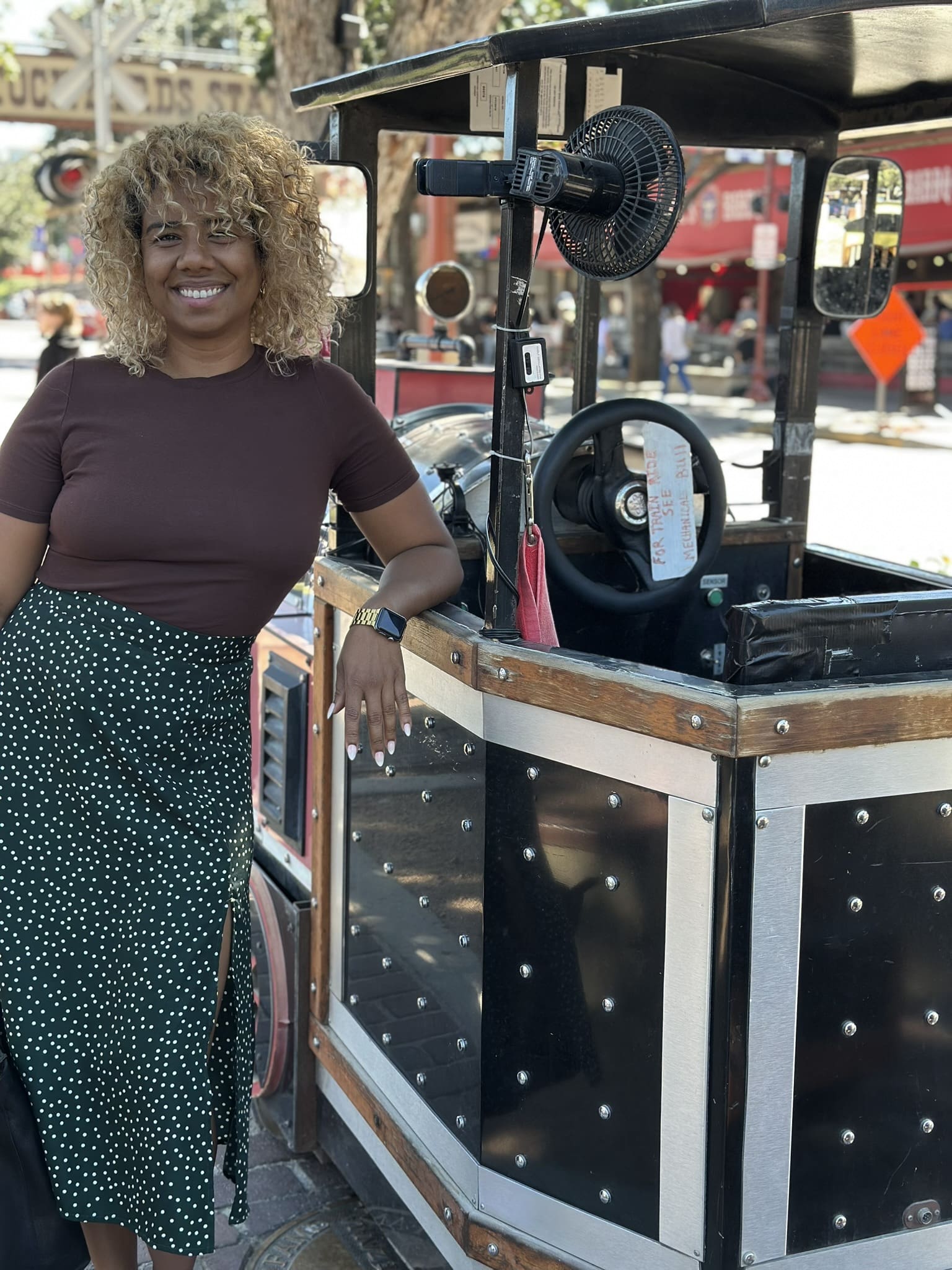

Every turning point in my life started with one quiet decision, to trust myself. This piece is a reflection on what happens when you stop waiting for permission and start believing in your own readiness.
When I look back at every major decision that changed my life, pivoting careers, stepping into leadership, starting my own business, and having children, there’s one thread that runs through all of it.
I had to trust myself before anyone else did.
For years, I kept waiting for proof. I wanted someone to tell me I was ready. A mentor’s reassurance. A sign. Something that said, yes, go. But permission rarely comes the way we expect it to.There’s a moment, quiet and almost invisible, where you have to decide that your own belief is enough. That even if no one else sees it yet, you do.
That moment changes everything.
Trust Isn’t a Feeling, It’s a Choice
I used to think trust was something that had to be earned or granted. Now I know it’s something we give ourselves first. Self-trust isn’t arrogance. It’s self-respect. It’s the calm certainty that your voice, your energy, your vision matter.
When you begin to trust yourself, the noise quiets. Your decisions get clearer. Your energy steadies. You stop chasing validation and start leading from the inside out.
It doesn’t make the path easier. But it makes it yours.
And I still have to practice it. Some days that inner voice is steady and sure; other days, it’s barely a whisper. But the more I choose to listen, the stronger it gets. Self-trust really is a muscle. It builds each time you lean in, even when it feels uncomfortable. Especially then.
What is self trust, actually?
Self trust is the muscle that lets you act on what you already know without first auditioning the decision to a room of people who weren’t there when you knew it.
It’s not confidence. Confidence is a feeling. Self trust is structural. It’s the thing that holds when the feeling isn’t there.
It’s not self-belief in the manifestation sense either. I’m not talking about telling yourself you’re worthy in the mirror. I’m talking about something quieter and more useful: the ability to register your own signal as data, and to act on it before someone else has time to overrule it.
High performers lose self trust first. That’s not a flaw in our character. It’s a structural cost of the lives we built.
When you spend a decade getting promoted by reading rooms, anticipating needs, managing other people’s emotions, and producing results that please decision-makers above you, your nervous system stops registering your own preferences as relevant input. You start treating your own voice the way a junior employee treats theirs. Polite. Hedged. Looking for cover.
Then a hard moment comes. A layoff. A return from maternity leave. A boss who flips. A promotion that didn’t fix anything. And suddenly you’re being asked to make a decision that requires the muscle you stopped using, and you can’t find it.
That’s where the work starts.
The five places self trust leaks
Here’s what I see in my clients. Not always all five. Usually three of them, in a pattern.
When you go ahead because the calendar says go
You knew the deck wasn’t ready. You knew the answer to the question they were going to ask was the answer they didn’t want. You knew the call needed to be rescheduled. You went anyway because the meeting was on the calendar and the calendar was the boss. The leak isn’t the meeting. It’s the moment your own read of the situation stopped being admissible.
When you ask for permission to do what you already know is right
You knew the answer. You ran it past three people anyway. Not because you needed input. Because you needed someone else to be on the hook with you if it didn’t work. The leak isn’t the asking. It’s the moment you decided your own conviction wasn’t load-bearing.
When you mistake the smart-sounding voice in the room for the truth
The person who talks fastest, citing the most frameworks, with the most assured tone, wins by default. You knew their take wasn’t right. But they sounded so sure. The leak is the moment you confused volume for accuracy.
When you tell yourself “I should know this by now”
Senior leaders do this constantly. The thing you don’t know becomes proof that you’re a fraud, instead of proof that you’re growing. The leak is the shame loop that keeps you from asking the question that would make you better at your job.
When you outsource the decision to whoever will be most disappointed
The decision becomes about managing the reaction, not about the actual right move. You pick the path of least disappointment to other people, and the cost is you. The leak is the moment your own steadiness became a resource for everyone but you.
How to build self trust (the practical work)
You don’t rebuild self trust by thinking your way back to it. You rebuild it by collecting evidence. Specifically, evidence of yourself doing what you already knew was right.
Here are the five practices I use with clients. None are dramatic. All of them work over time.
Start with one body cue per day
For one week, notice one moment per day when your body told you something before your brain did. Don’t act on it. Just notice it and write it down. The point isn’t to make a big move. The point is to teach your nervous system that body cues are admissible evidence again.
Ask “what do I think?” before any meeting
Before walking into any conversation, take 30 seconds and answer the question: what do I actually think about this? Write the answer in one sentence. Then go into the meeting. You may or may not say it. The exercise isn’t about speaking up. It’s about knowing what you think before someone else has a chance to write it for you.
Track the gap between what you knew and what you said
At the end of the day, write down one moment where what you said was a softer version of what you knew. Not to beat yourself up. To make the gap visible. Patterns become observable. Observable patterns become changeable.
Keep a record of your last 10 good calls
Self trust collapses partly because we don’t remember our wins. The wins become the new baseline and we move on. Keep a running list of the last 10 calls you made that turned out to be right. Read it on the days the muscle feels weakest. This isn’t bragging. This is reminding your nervous system that your judgment has a track record.
Stop asking the people who never had to know
If you’re rebuilding self trust, audit who you’re asking. There are people in your life whose role in your decision-making has been to validate. They don’t have skin in the game. They’re not building the same muscle. They’re not always wrong, but their input shouldn’t outweigh yours on the things you have to live with. Choose the rooms that demand you bring yourself, not the ones that let you defer.
Self trust exercises for senior leaders
The five practices above are daily. These two are weekly.
The Friday five. Once a week, write down five decisions you made that week without asking anyone. Even small ones. The lunch you ordered. The boundary you held. The email you didn’t send. Building self trust is partly about noticing where you already have it.
The recovery list. Once a week, write down one moment when self trust wavered and you still moved forward. The point is to teach yourself that the muscle doesn’t require you to feel certain. It requires you to act anyway.
If you want a structured way to see your own pattern, I built a 5-minute assessment that maps where capable professionals get stuck without realizing the cause. Take the assessment here. It surfaces the pattern that may be keeping you circling the same decision.
Why self trust is the foundation of the Make Moves Method
Most coaching frameworks start with goals. Mine starts with the muscle that lets you act on what you already know. The Make Moves Method I teach has three layers: Awareness, Inner Authority, and Aligned Action. Self trust is the muscle that holds Inner Authority. Without it, you can’t move forward from what you’ve noticed. You can only react to what other people want.
I call the state high-performing leaders reach when they’ve spent so long pouring out that they no longer remember their own signal “the empty cup.” It’s not a framework yet, it’s a pattern I see in client after client. The promotions kept coming. The team kept growing. The praise kept landing. And inside, the cup ran dry and you stopped hearing yourself over the noise
The work isn’t to add more. It’s to come back to what was always there.
That work starts with self trust. It’s the first muscle to come back online when a leader stops outsourcing their authority. And it’s the muscle that lets every other piece of the work hold. Because if you can’t trust your own read of a situation, you can’t lead inside it. You can perform leadership. You can’t be a leader.
I learned this twice. The first time was the year wd~50 closed in November 2014, and then Alder closed nine months later in August 2015. Two layoffs, two restaurants, two teams I’d helped build, gone inside a year. I had to rebuild a career and a sense of myself at the same time.
The second time was August 2024. I had left Toast in June, my grandmother-in-law’s health emergency and death had reshaped the family, and I was suddenly home with my son and a question I couldn’t put down: was I going to wait for someone to hire me back into a leadership role, or was I going to trust the part of me that knew it was time to build something of my own. Nobody was going to tell me I was ready. I had to decide.
Both times, the work was the same. Quiet, slow, structural. And both times, the first move was to stop waiting for the world to confirm I was ready. To trust that the part of me that knew, knew.
That’s what I help my clients do now. I’ve written more about who this work is for in Why Most Career Pivots Fail (And How to Make Yours Sustainable). If you’re returning to leadership after a leave, I’m Reopening From a Stroller picks up the other side of this same thread.
A reflection for you
Where are you still waiting for permission?
What would shift if you chose to trust yourself today, without needing anyone else to say you’re ready?
Your future self already knows you are.
If this landed, you might also like:
- How Rediscovering Joy Changed My Leadership Style
- Why Most Career Pivots Fail (And How to Make Yours Sustainable)
- Nobody knew I was sleeping on the floor
Want more on the Make Moves Method and the patterns I see in senior leaders? Join my email list for letters when I have something worth saying. And if you want to see your own pattern first, take the Why Am I Stuck assessment here.


Comments will load here
Be the first to comment