

Back to Basics: Leading Teams Through Uncertainty and Disruption
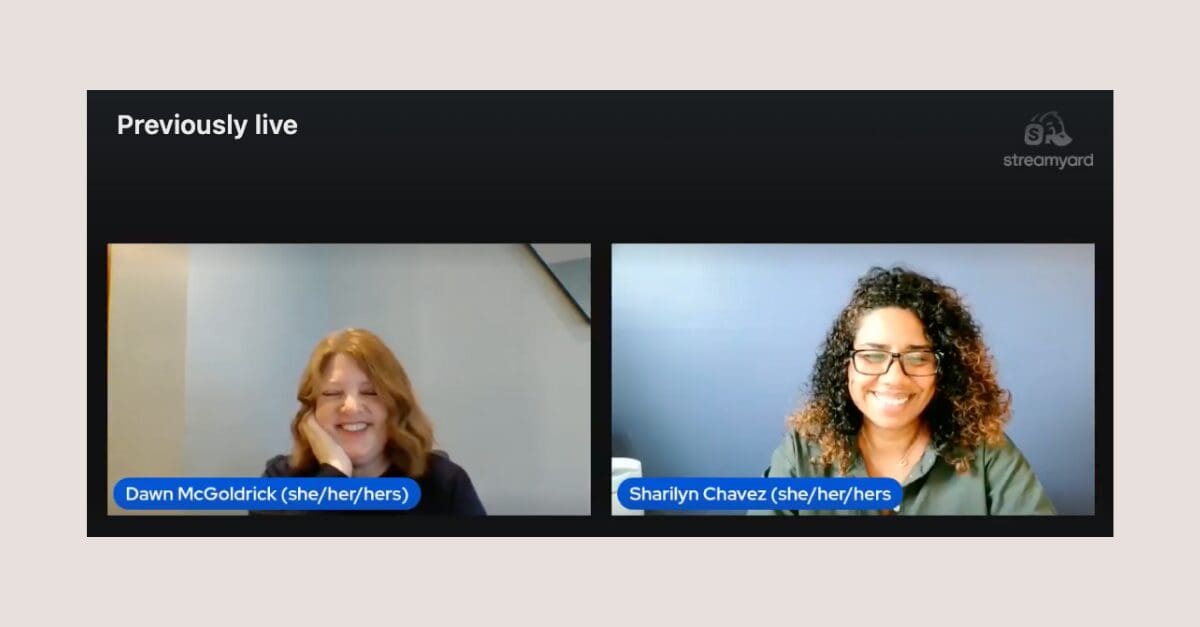

I’ve led teams through restructures, layoffs, shifting priorities, and the uncertainty that follows. It sucks. As a leader, you’re trying to keep people focused while answering questions you don’t have answers to yourself. What always helped me and my teams wasn’t adding more. It was hitting RESET and going back to basics. Click Here to watch the Linkedin Live
Everything Feels Important Right Now
Dawn and I recently hosted a LinkedIn Live on leadership, AI overload, and what teams actually need right now.
What we’re seeing in coaching conversations is that leaders are exhausted from carrying too much at once, while teams are overwhelmed trying to keep up with constantly shifting expectations.
It’s Clear, most leaders are operating in some version of overload.
There is more coming at them than ever. More expectations. More tools. More decisions. More AI layered into their day to day work.
And despite all of that, things are not getting easier.
If anything, they are getting more complex.
AI was supposed to simplify work. But for many leaders, it is doing the opposite. It is adding more output, more decisions, and more to manage. Organizations are investing heavily, but the expected gains in productivity and impact are not always showing up.
And this is not new.
We have seen this pattern before with other technologies. The challenge is not usually the tool itself. It is how it is introduced and how teams are expected to work around it.
Which leads to the real issue:
This is not just a complexity problem.
It is a lack of direction and alignment.
Where It Starts: Decision Fatigue
One of the first places this shows up is decision fatigue.
Leaders are making an overwhelming number of decisions every day. Many of them should not even sit with them in the first place.
At some point in your leadership journey, you have likely experienced this. Everything routes through you. Not because you want it to, but because it gradually becomes the default.
And before you know it, you have become the bottleneck.
I remember hitting that moment in my own leadership. Everything was coming through me. Questions, decisions, approvals. It was constant.
And the reality was, I was not leading anymore. I was managing flow.
So I had to step back and rethink it.
Instead of trying to stay on top of everything, I shifted ownership across the team. We had multiple priorities and products, so each person owned a specific KPI. They tracked it, reported on it, and taught the rest of the team what was working and what was not.
What changed was not just the workload.
The team started thinking differently. They took ownership. They made decisions without waiting on me. They developed new skills and a stronger understanding of the business.
And most importantly, I was no longer the bottleneck.
Because if everything runs through you as a leader, you do not have a team.
You have a dependency.
Crystal Balls vs. Rubber Balls
One idea Dawn shared during our LinkedIn Live that really resonated was the distinction between crystal balls and rubber balls.
Some priorities are crystal balls. If you drop them, they break. Others are rubber balls. They may bounce for a while, and you can come back to them.
The challenge on many teams right now is that everything is being treated like a crystal ball. Every request feels urgent and people cannot operate that way forever.
Dawn shared an example from a large digital transformation program she led, where too many decisions were being escalated because people were not clear on what mattered most. Once the team had shared language around what needed protection, what could wait, and what could temporarily bounce, people started making better decisions without escalating everything.
That distinction is so important now, as AI increases the volume of information, decisions, and output teams are managing.
AI Is Adding Another Layer
Contrary to what a lot of people expected, for many leaders AI has not reduced workload yet.
It has added another layer to manage.
Now people are:
reviewing AI-generated work,
learning new tools,
figuring out new workflows,
double-checking accuracy,
and trying to determine what still requires human judgment.
As Dawn said during the Live, the issue is often not the technology itself. It is how organizations are implementing it. Without clear direction and team alignment, AI can actually create more confusion instead of less.
The Rise of “Lone Wolf Mode”
As teams embrace AI for individual work, we’re also seeing people are collaborating less. Some research reports published recently also show the same findings.
More people are working in what we called “lone wolf mode.Not necessarily because they want disconnect from their teams, but they are overwhelmed and trying to keep up, so they are getting their heads down and iterating individually with AI to help increase their output..
The impact of this is that a team cannot be innovative if they all sitt in silos generating ideas separately. Innovation benefit from discussion, pushback, different perspectives and conflict.
One of the most important things we said during the Live was this:
if everything still has to run through the leader, the team is not actually operating as a team yet.
Back to Basics: What “back to basics” means
When you step back, all of this points to the same thing:
Teams are not struggling because they cannot handle change.
They are struggling because there is no shared way of operating.
Going back to basics does not mean doing less leadership.
It means focusing on what actually drives stability and performance:
Ownership
Who owns what so decisions do not default to the leader
Priorities
What actually matters and what does not right now
Ways of working
How the team communicates, collaborates, and shows up, especially under pressure
These are not new ideas.
But they are often the first things to get dropped when things get busy.
And they are the exact things that help teams stay steady when everything else feels uncertain.
A Question to Reflect On
Where is your team stuck right now?
Who owns what
What actually matters
How you are working together
One Practical Step
Pick one area. Not all three. Make it explicit this week.
- Define a decision owner
- Reset a priority
- Call out something that is not actually urgent
Not everything needs your attention right now.
Final Thought
When the environment becomes more complex, the instinct is to add more. More tools. More structure. More control.
But the leaders who navigate it best do the opposite.
They simplify.
They focus.
They bring their teams back to fundamentals.
Most teams do not struggle because they cannot handle change.
They struggle when there is no shared direction on what matters and who owns it.
This is exactly the work we do with leadership teams.
We help teams step back, cut through everything coming at them, and reset how they operate. Not by adding more, but by getting aligned on what matters, how they work together, and how they show up under pressure.
Because that is what actually improves performance in uncertain environments.
TEAM RESET FRAMEWORK ONE PAGER
If you are reading this and thinking, “We need to reset how our team operates, but I am not sure where to start,” we put together a simple one-page framework.
It walks you through:
- how to reflect on what is not working
- how to run the conversation with your team
- how to reinforce it so it actually sticks
If you want it, comment the word Reset below and we will share it with you.
If you’re not sure where to start: take my Why Do I Feel Stuck? quiz. It gives you language for the patterns that might be shaping your current decisions.


Comments will load here
Be the first to comment