

I Lost My Spanish In My Godmother’s House
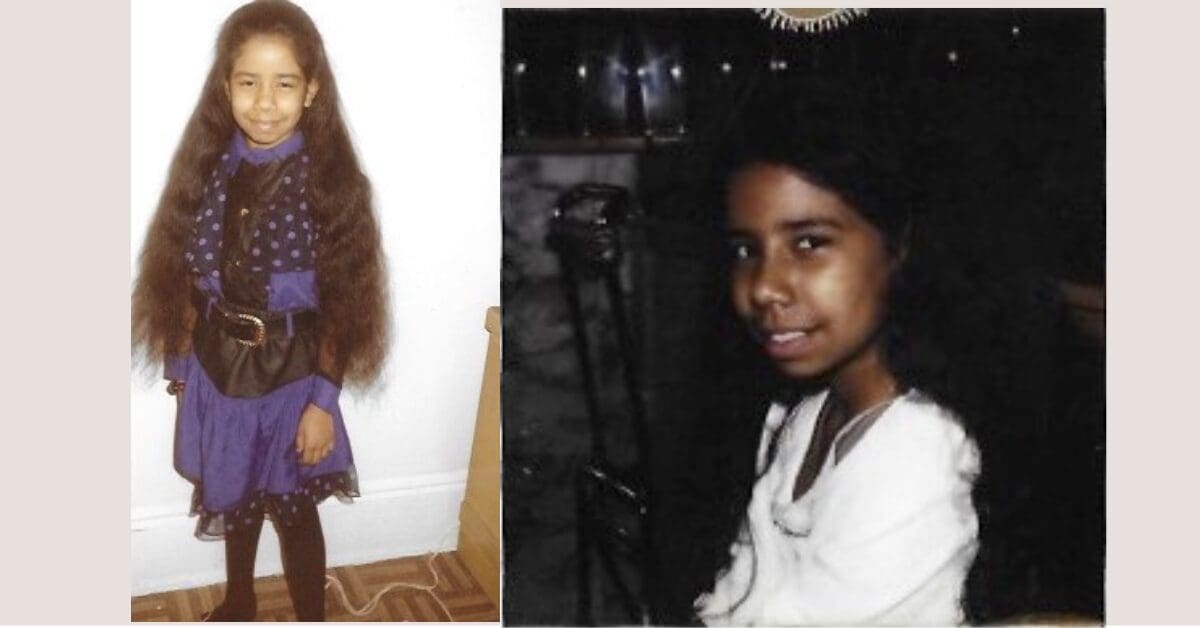

I was seven or eight. Not long after my mother died.
I was living most days at my godmother’s house by then. My mother had raised me bilingual, Spanish and English both, from the time I was born. She was Puerto Rican, and Spanish was the language she was most herself in. Her English was broken. Spanish wasn’t a lesson in our house. It was just how she loved me.
There was a gathering at my godmother’s one day. A friend of my godmother’s niece was there, a woman who mostly spoke Spanish. I was sitting in a little chair by the door in the living room, in the middle of an English conversation, and I didn’t know how to say pinche, the little wooden clothespin my mother always called by its Spanish name. So I turned to her and asked, in Spanish, how to say it.
I got scolded so badly for it that I remember the shape of the room more than I remember the actual words. Where I was sitting. Who was watching. Every adult in the room turning toward me at once, my godmother and especially her sister. The only person who’d understood me was the girl I’d asked, and she looked as shocked as I felt. She kept saying I’d only asked how to say clothespin.
For a long time I thought the problem was the language itself. That speaking Spanish in the wrong room was a kind of trespassing. It’s only looking back, now that I do this work for a living, that I’ve started to wonder if the real problem was something else. Not what I said. The fact that I’d said something in that house that almost no one in it could check.
Nobody sat me down afterward and told me I couldn’t speak Spanish anymore. Nothing that official happened. I just spoke it less. And then less than that. After my mother died I was mostly around white people who only spoke English. My brothers were older by then, old enough that we spoke English with each other. I wasn’t around my mother’s family much either. Most of them didn’t care for my godmother, so that side didn’t come around often. And underneath all of it, I was scared. Scared of that room again, of every adult turning toward me at once for something I hadn’t even known was wrong. So I didn’t reach for it. A few years of not reaching for something, and it’s gone.
What came after took me the longest to make peace with. A few years later, my godmother needed a translator for something. She needed my Spanish for something practical, after years of me having no real chance to keep it. When I couldn’t help her the way she needed, she told me I was a disgrace to my mother.
I don’t think there’s a sentence that could have landed harder. My mother had spoken Spanish before she spoke anything else. It was the language she loved me in. Being told I’d disgraced her by losing it felt like being told she was disappointed in me from somewhere I couldn’t reach to explain myself. I felt ashamed in a way I didn’t have words for yet. Like she was mad at me from heaven.
I’ve been doing this work long enough now to recognize the shape of what happened to me in almost every client who sits down across from me, wearing completely different words. Someone who stopped voicing opinions in meetings after one got dismissed publicly. Someone who stopped asking questions after being told once, in front of a whole team, that they should already know the answer. Someone who was fluent in something once. Direct, curious, unmonitored. And then wasn’t, not because anyone forbid it outright, but because being that version of themselves got treated as a risk exactly one time too many, and fear did the rest quietly, on its own schedule.
I didn’t lose my Spanish all at once. I lost it slowly, out of fear, one decision at a time, until there was nothing left to reach for. And when it was finally gone, the same fear I’d been managing since I was seven got handed back to me as a personal failure.
This is the part of the Make Moves Method I come back to most with clients, the Inner Authority phase. Not building confidence from nothing. Rebuilding trust in a voice you have real, specific evidence taught you was dangerous to use. You don’t get back to yourself by deciding to be braver. You get back by noticing, precisely, which room taught you to go quiet, and understanding that the room was wrong, not you.
Here’s the question I’d leave you with, whether or not language is part of your story at all: what did you stop doing out loud, because somewhere along the way, doing it stopped being safe?
Sharilyn Chavez, ACC
Executive & Leadership Coach
Trauma-Informed Certified
Helping people make their next move with self-awareness instead of survival. (CPC, ELI-MP, ACC)
Before you make your next move…
Take a few minutes to better understand what’s driving your decisions.
My free Why Do I Feel Stuck? quiz will help you uncover the thought pattern that may be keeping you stuck and provide personalized insights based on your results.


Comments will load here
Be the first to comment